Rolex Didn’t Just Revive Old Ideas at Watches Market 2026
Rolex has operated in a strangely predictable way. Incremental updates. Slightly revised lugs. New dial colors. A bracelet tweak here, a movement refresh there. Even when the brand introduced genuinely impressive engineering, it rarely felt eager to advertise it too loudly.

That’s why the new “Exceptional Creations” umbrella introduced at Watches & Wonders 2026 feels interesting. Not revolutionary, necessarily. But different.
Under this new banner, Rolex debuted two watches that approach innovation from completely opposite directions: a surprisingly refined Rolesium Daytona and the unexpected return of the Rolex Yacht-Master II — a watch many collectors quietly assumed was gone for good.
And honestly, neither release feels entirely safe.
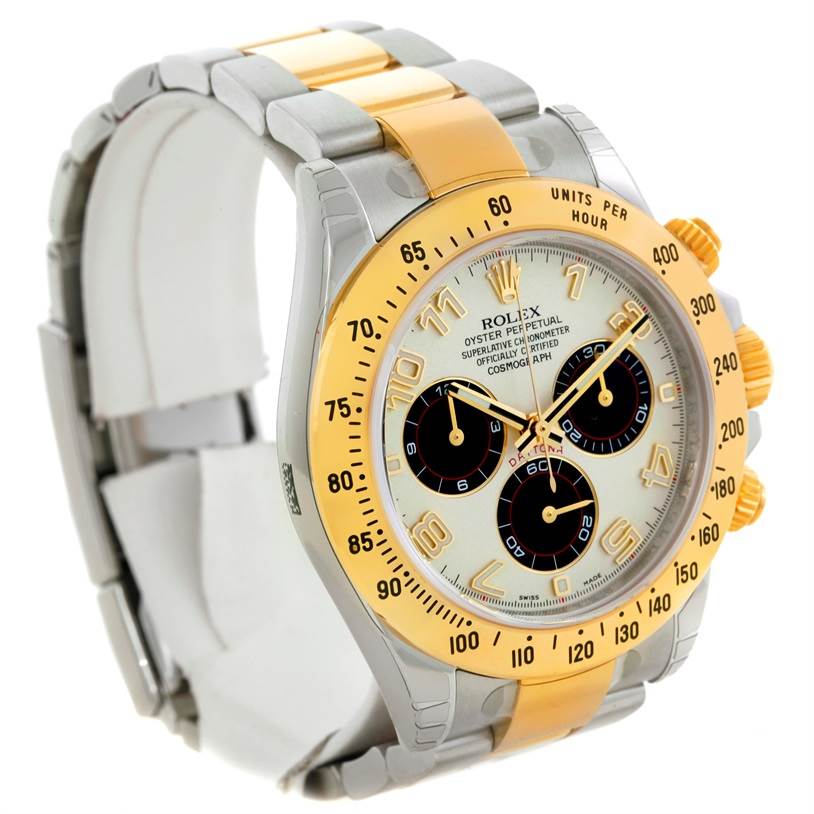
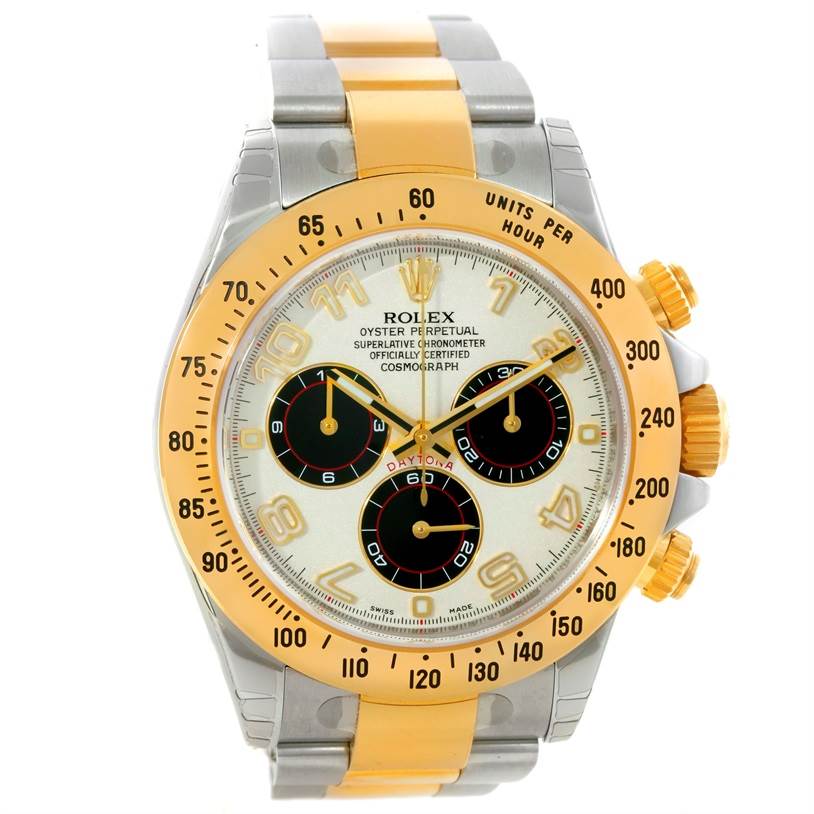
The Daytona 126502: Familiar at First Glance, Stranger the Longer You Look
For anyone not deeply immersed in Rolex terminology, Rolesium refers to a combination of Oystersteel and platinum. Traditionally, replica Rolex reserved the term for the Yacht-Master collection, so seeing it migrate to the Daytona immediately makes this release feel slightly unusual.
At its core, the watch still follows the familiar Daytona formula:
- 40mm Oyster case
- 100 meters of water resistance
- Oyster bracelet
- Cerachrom bezel
- Caliber 4131
But then the details begin stacking up.
The middle case and bracelet remain Oystersteel, while platinum appears in smaller, almost intentionally restrained areas — the bezel ring and caseback ring especially. Rolex could have leaned heavily into visible precious metal here. Instead, the watch feels oddly understated for a platinum-adjacent Daytona.
That restraint may actually become part of the appeal.
The Cerachrom Bezel Might Matter More Than The Platinum
The biggest visual shift probably isn’t the Rolesium construction at all.
It’s the anthracite Cerachrom bezel.
Rolex says the ceramic formulation now incorporates tungsten carbide, giving the insert a more metallic sheen than previous matte Cerachrom bezels. In photos, the difference looks subtle. In person, though, this could completely change how the watch wears under different lighting conditions.
There’s also a surprisingly tasteful vintage callback here. The tachymeter numerals now sit horizontally, echoing early Daytona references from the 1960s.
Not everyone notices details like this immediately. Daytona collectors absolutely will.
| Feature | Daytona 126502 |
|---|---|
| Case Size | 40mm |
| Material | Oystersteel + Platinum (Rolesium) |
| Bezel | Anthracite Cerachrom |
| Dial | Grand Feu enamel |
| Movement | Caliber 4131 |
| Power Reserve | Approx. 72 hours |
| Bracelet | Oyster bracelet |
| Water Resistance | 100m |
The Enamel Dial Quietly Steals The Show
Rolex opted for a grand feu enamel construction rather than lacquer, firing the dial components at temperatures above 800°C. That sounds technical — and it is — but the practical result is what matters: the white surface appears deeper, glossier, and less flat than typical lacquer dials.
There’s a kind of density to enamel that’s difficult to fake.
What makes this particularly interesting is that Rolex mounted the enamel onto ceramic plates before attaching them to a brass base. That’s not the sort of construction you normally associate with modern Rolex production efficiency. It feels almost unnecessarily complicated, which, in this context, is probably a compliment.
And yes, the sapphire caseback returns as well.
At this point, Rolex seems increasingly comfortable revealing its movements on select models, especially when decorative finishing is involved. The Caliber 4131 inside remains technically familiar:
- column wheel chronograph
- vertical clutch
- Chronergy escapement
- Parachrom hairspring
- Paraflex shock absorbers
Still, seeing Rolex Côtes de Genève through a sapphire back on a Daytona would’ve sounded almost absurd a decade ago.
Now it feels normal surprisingly quickly.
Is The Daytona 126502 Actually “Exceptional”?
That depends on what someone expects from Rolex in 2026.
If the expectation is radical disruption, probably not. Mechanically, this remains very much a modern Daytona. The movement architecture is familiar, the dimensions are conservative, and Rolex clearly avoided doing anything that might alienate its existing buyer base.
But there’s another way to read this release.
The 126502 feels like Rolex experimenting with texture rather than transformation:
- enamel instead of lacquer
- metallic ceramic instead of matte ceramic
- restrained platinum rather than obvious platinum
- vintage typography mixed with modern execution
None of these changes alone are dramatic. Together, though, the watch develops a different personality than recent Daytonas.
And realistically, scarcity alone will probably turn this into one of the hottest Daytona references of the next several years whether collectors agree on the design or not.
That’s just how the Daytona ecosystem works now.
The Yacht-Master II Returns — Somehow
After disappearing in 2024, the Yacht-Master II looked finished. Completely finished.
It had always occupied a strange position inside Rolex’s catalog — oversized, complicated, expensive, deeply niche, and honestly a little intimidating for casual buyers. Even many enthusiasts admired it more than they actually wanted to own it.
And then Rolex brought it back.
Not as the Yacht-Master III, interestingly enough. Still the Yacht-Master II.
That alone says something about how Rolex views continuity.
The New Yacht-Master II Is Cleaner, Smarter, And Probably More Usable
The previous Yacht-Master II was mechanically impressive but notoriously awkward to operate. The Ring Command system required a sequence of bezel rotations, crown adjustments, and pusher interactions that many owners probably never fully mastered.
Rolex seems aware of that now.
The updated Caliber 4162 simplifies the countdown programming process considerably. The lower pusher advances the countdown minute hand incrementally, while the movement retains the programmed setting automatically.
Frankly, this is a huge improvement.
And there’s a genuinely fascinating detail here: the countdown hands now rotate counterclockwise — a first for Rolex.
That sounds minor until you see it conceptually. Suddenly the countdown display visually behaves like a countdown instead of a standard chronograph pretending to be one.
It’s the kind of detail Rolex rarely experiments with.
| Feature | Yacht-Master II 2026 |
|---|---|
| Case Size | 44mm |
| Thickness | 13.9mm |
| Movement | Caliber 4162 |
| Function | Programmable regatta countdown |
| Bezel | Blue Cerachrom diver-style bezel |
| Water Resistance | 100m |
| Bracelet Width | 22mm |
| Escapement | Chronergy |
Rolex Simplified The Design Without Removing The Weirdness
The old bezel-based countdown scale is gone. Instead, the countdown now lives on the flange ring, while the ceramic bezel behaves more like a traditional timing bezel with minute graduations.
Visually, the watch feels cleaner because of this. Less cluttered. More modern.
The pushers have also been reshaped to resemble sailing winches, which could sound gimmicky on paper but actually fits the Rolex Yacht-Master identity reasonably well.
One slight disappointment, though: the movement still uses the Chronergy escapement rather than the newer Dynapulse system introduced on the Land-Dweller in 2025.
Collectors will definitely notice that omission.
At the same time, development timelines probably overlapped here. Rolex movements aren’t redesigned overnight, and the 4162 already appears heavily reworked internally.
So it may not be entirely fair to criticize the decision too harshly.
The Most Interesting Thing About Both Watches Isn’t Technical
It’s philosophical.
For years, Rolex optimized consistency above everything else. The brand almost never allowed itself to appear experimental, emotional, or niche.
These 2026 releases feel different.
The Daytona experiments with materials and texture in ways Rolex normally avoids. The Yacht-Master II returns despite being commercially unnecessary and mechanically overcomplicated for most buyers.
Neither watch feels random.
Instead, they suggest Rolex may finally be allowing parts of its catalog to become slightly less predictable. Not wildly creative. This is still Rolex, after all. But maybe a little more comfortable taking controlled risks than it was five or ten years ago